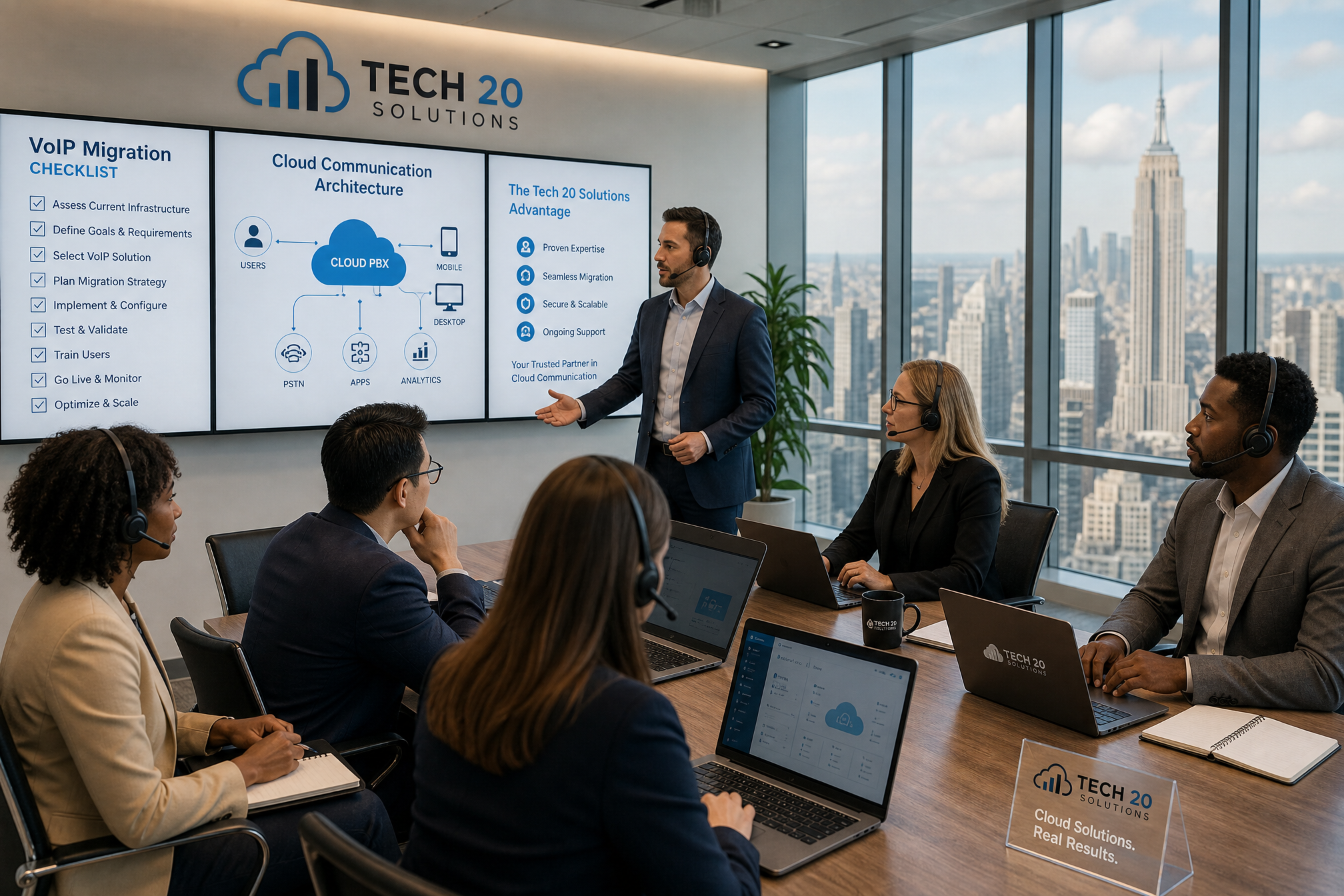
VoIP Migration Checklist NYC: Steps Before You Switch
Switching to a VoIP phone system can significantly enhance business communications for companies in New York City. It promises improved flexibility and cost savings. However, to ensure a smooth transition, businesses must carefully plan their migration. This involves aligning technology with current needs, securing data through strong cybersecurity measures, and maintaining business continuity during the switch. Addressing these considerations will steer a successful migration to VoIP.
What should a business do before migrating to VoIP?
Before migrating to VoIP, businesses should assess their current infrastructure, plan for seamless number porting, and establish a comprehensive VoIP migration checklist NYC-oriented. This ensures effective communication systems are set up to manage the change.
Key Takeaways
- Evaluate current telecommunication infrastructure.
- Ensure robust data security measures are in place.
- Plan for potential downtime and continuity risks.
- Develop a comprehensive VoIP migration checklist.
- Communicate changes to all stakeholders.
Why This Matters for Businesses
Switching to VoIP offers numerous advantages such as reduced costs and enhanced flexibility. However, ignoring the preparatory phase can lead to operational disruptions and security vulnerabilities. One mistake we see fairly often is an underestimation of the network's readiness to handle VoIP traffic, which could impact business continuity and efficiency.
What Most Businesses Miss
Many businesses don't realize the importance of aligning VoIP systems with existing cybersecurity measures. A lack of security could expose sensitive information to cyber threats. An often-overlooked concern is the need for employee training, which is crucial for maximizing the benefits of a new system.
Where Problems Usually Begin
Problems typically arise from inadequate planning—especially concerning number porting and PBX replacement. Businesses frequently overlook these aspects, leading to disrupted communication channels. Ensuring prior coordination with the service provider can mitigate these issues.
Practical Checklist for VoIP Migration
- Assess Infrastructure Needs: Evaluate current network capabilities to ensure they can handle increased data traffic.
- Establish Security Protocols: Secure communication channels are critical to protect sensitive data.
- Coordinate Number Porting: Plan for seamless number transfer to prevent communication disruptions.
- Prepare a Continuity Plan: Plan alternative communication methods to maintain operations during the crossover.
- Implement Staff Training: Educating teams on VoIP system functionalities ensures smoother adoption.
What Tech20 Recommends
Tech 20 Solutions recommends starting with a thorough assessment of your current telecommunication setup. This helps to identify necessary upgrades. Focus on integrating solid cybersecurity measures, which are essential in maintaining your data integrity. Visit our Cloud Solutions page for more information on enhancing communications technology. Lastly, prepare for staff training to facilitate a seamless transition.
Common Mistakes to Avoid
- Neglecting to evaluate existing network capacity.
- Overlooking the importance of cybersecurity.
- Failing to plan for number porting logistics.
- Ignoring stakeholder communication and training.
Frequently Asked Questions
How can I ensure a seamless VoIP transition?
Ensure your network infrastructure is capable of supporting VoIP traffic, coordinate number porting in advance, and conduct staff training. This minimizes disruptions during the transition.
What are the potential risks of migrating to VoIP?
Potential risks include data breaches due to inadequate security measures, operational downtime, and ineffective communication training. Address these risks by planning and training.
Why is number porting important in VoIP migration?
Number porting ensures that your current business phone numbers remain operational during the switch, maintaining continuity and minimizing disruption to customer communication.
Should I replace my PBX system before switching to VoIP?
If your PBX system is outdated or incompatible with VoIP, replacement is necessary to avoid disruptions. Consult with an IT consultant for tailored advice.
How does VoIP affect business continuity?
VoIP can enhance flexibility and efficiency. However, without a robust continuity plan, any disruption during migration could seriously affect operational stability. Plan accordingly to minimize interruptions.
Reflecting on VoIP Migration
Switching to a VoIP system requires meticulous planning and a focus on business continuity. By addressing infrastructure, security, and communication strategies upfront, businesses can benefit from VoIP without interruptions.
How Tech 20 Solutions Can Assist You
At Tech 20 Solutions, we understand the intricacies of a successful VoIP migration. Our expertise helps ensure a smooth transition, from infrastructure evaluation to ongoing support. Learn more about Tech 20 Solutions to find out how we can assist your business in making informed technology decisions.