Hybrid Work IT: Practical Cloud, Security, Microsoft 365
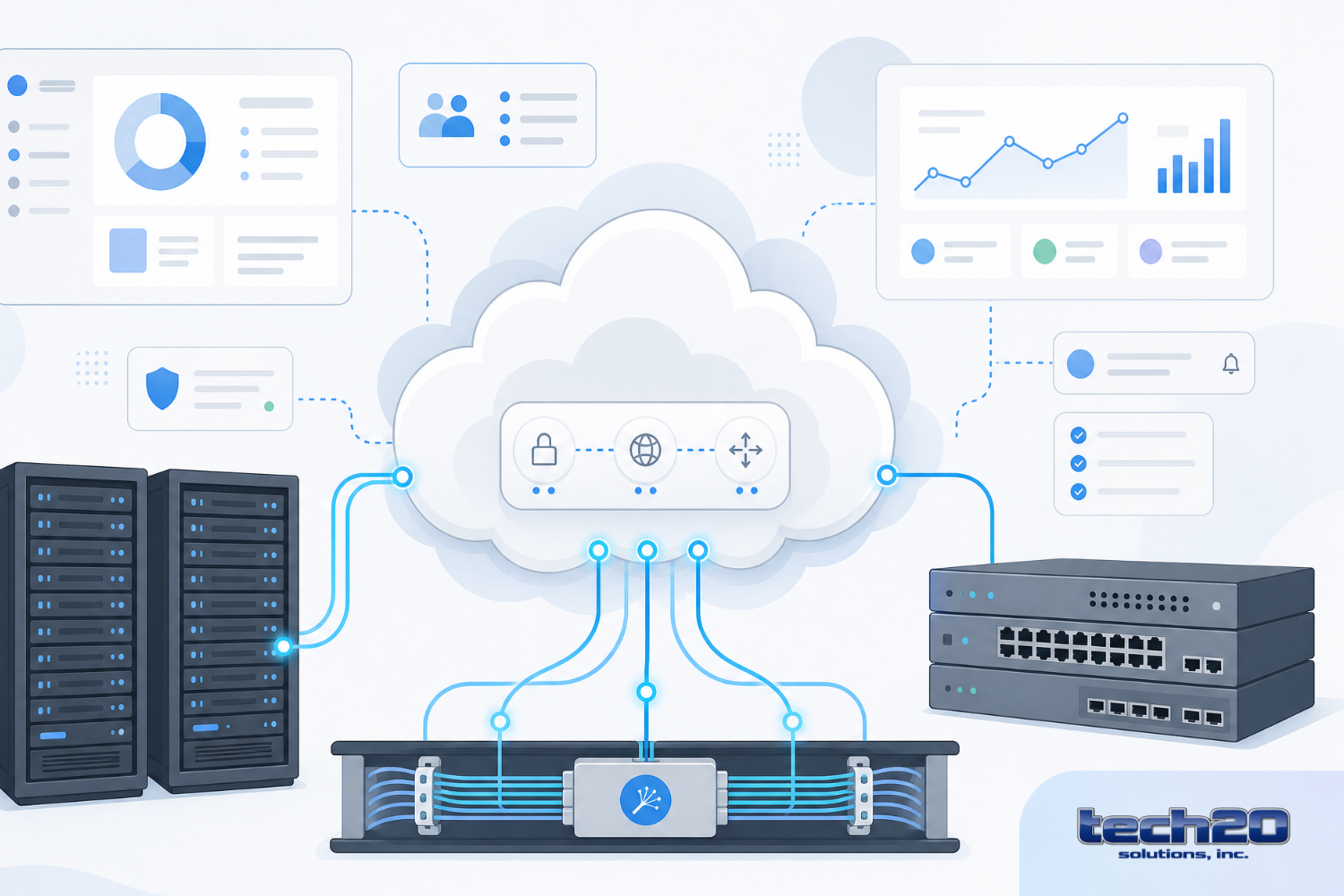
Unexpected outages can quickly highlight the gaps in a business's technological setup, especially for those relying on hybrid work environments. When it comes to supporting hybrid teams, the focus shifts to flexible, scalable, and secure technology. The right technology enables seamless collaboration regardless of location, and one primary solution here is Cloud Solutions.
Many organizations struggle because they fail to adapt their IT infrastructure to suit new working models. Often, these struggles stem from the attempt to apply traditional, in-office processes to a distributed workforce without considering how workflow and communication fundamentally change in hybrid settings.
Businesses then ask how they can structure their IT to adequately support hybrid work setups. By adopting a vendor-agnostic, cloud-first approach, Tech20 Solutions helps businesses evaluate the best strategies for their unique needs. Focusing on flexible cloud solutions is more than just reacting to current trends; it's about future-proofing operations and ensuring agility in changing environments.
Quick Answer
Support for hybrid teams revolves around cloud-based tools, robust cybersecurity measures, and effective communication platforms like Microsoft 365. These technologies help maintain productivity and secure remote access across various locations.
Key Takeaways
- Invest in scalable Cloud Solutions to accommodate remote work demands.
- Ensure cybersecurity protocols are in place to protect remote access.
- Implement collaboration tools to facilitate seamless team communication.
- Tailor technology solutions to specific operational needs and growth goals.
- Continuously evaluate and update IT systems to align with hybrid work dynamics.
Quick Business Snapshot
| Category | Details |
|---|---|
| Best For | Professional Services |
| Business Size | Small to Medium |
| Primary Benefit | Enhanced Flexibility |
| Implementation Complexity | Moderate |
| Tech20 Service Fit | Cloud Solutions |
| Typical Environment | Hybrid Work Settings |
Who Should Consider This Solution
- Companies expanding remote operations can benefit from cloud flexibility.
- Organizations handling sensitive data need enhanced cybersecurity measures.
- Organizations with limited in-office presence can optimize cloud resources.
- Entities experiencing growth spurts should replace outdated systems.
- Firms with multi-site operations require seamless communication tools.
Why This Matters for Your Business
Transitioning to hybrid work settings highlights certain vital technology needs. Primarily, businesses must invest in adaptable solutions that ensure seamless operations. Cloud technology and supporting tools mitigate the risks associated with traditional infrastructure, providing scalability and flexibility.
What Changes as Your Business Grows
Growth inherently demands reevaluation of existing systems and processes. Hybrid work further complicates this, as traditional infrastructure may not support dispersed teams. Here, cloud-based solutions provide a comprehensive answer, enabling businesses to scale their support structure alongside their workforce.
The Tradeoffs Most Businesses Overlook
While cloud solutions provide scalability and flexibility, they require businesses to reevaluate data security and compliance measures. Cybersecurity must evolve in tandem to protect sensitive information accessed remotely. A balance between accessibility and security ensures data integrity without compromising productivity.
Planning for Long-Term Growth
Investing in adaptable technology solutions supports agile and sustained growth. As businesses scale operations, IT frameworks must adjust dynamically. Starting with strategic cloud integration offers businesses room to grow while adapting to evolving market demands.
A Practical Example
A financial services firm aims to adopt a hybrid work strategy to increase flexibility. Their critical decision involves enhancing their IT framework to support secure remote access. By implementing robust cloud solutions, they ensure their workforce maintains productivity while safeguarding sensitive client data. This strategic approach fits their hybrid model, ensuring agility without sacrificing security.
Practical Checklist
- Evaluate your current technology infrastructure for flexibility.
- Consider implementing cloud solutions for scalability.
- Ensure all cybersecurity measures are up to date.
- Adopt collaboration tools like Microsoft 365 for team communication.
- Train staff on new technology tools and protocols.
- Regularly review and update IT policies and procedures.
- Assess data storage needs for remote access.
- Plan for future technological advancements.
What Tech20 Solutions Recommends
Start by assessing your business's goals, existing infrastructure, and future growth plans. Prioritize scalable and secure technology solutions that align with hybrid work's specific challenges. Tech20 Solutions helps businesses identify the right strategy through a vendor-agnostic approach. Begin with identifying your immediate needs before looking at cloud and communication tools as pivotal parts of your strategy. These practical steps ensure your technology supports your business's long-term vision.
Common Mistakes to Avoid
- Failing to upgrade IT infrastructure; this limits remote work capabilities.
- Neglecting robust cybersecurity practices, leaving data vulnerable.
- Overlooking staff training on new communication tools, reducing effectiveness.
- Not regularly updating IT policies, which may cause compliance issues.
- Underestimating the importance of scalable cloud solutions for business agility.
Frequently Asked Questions
What technology supports hybrid work environments?
Cloud solutions, collaboration tools like Microsoft 365, secure VPNs, and upgraded cybersecurity protocols are essential.
Why is cybersecurity important in hybrid work?
Cybersecurity ensures secure data transmission and access, maintaining the integrity of sensitive information across remote connections.
How can cloud solutions benefit my business?
They offer scalability, cost-efficiency, flexibility, and remote access, accommodating the evolving needs of a hybrid workforce.
What should I consider for a hybrid work IT setup?
Focus on scalability, security, ease of integration, and compatibility with existing systems for seamless operation.
How can Tech20 Solutions help with hybrid IT plans?
Tech20 Solutions can guide businesses in choosing vendor-agnostic, scalable solutions tailored to unique operational needs.
Closing Insights on Hybrid Work Technology
The pivot to hybrid work demands thoughtful adoption of technology solutions that align with a business's goals and infrastructure. Success lies in the strategic combination of cloud services and security measures, ensuring sustainable growth. By understanding core operations before implementing technology, businesses can navigate this shift more effectively.
Why Trust Tech20 Solutions
Nationwide expertise: Access comprehensive business technology consulting services.
Vendor-agnostic approach: We recommend solutions that best fit your unique business needs.
Cloud solutions: Our team focuses on modern cloud integration and support.
Cybersecurity focus: Strengthen your data protection with practical security strategies.
Industry experience: Deep telecommunications and IT background informs our consulting perspective.
Moving Forward with Your IT Strategy
Building a robust IT strategy starts with understanding your business objectives and current technology setup. Through a collaborative, vendor-neutral approach, Tech20 Solutions helps ensure every solution aligns with your growth and operational needs. By leveraging our expertise in cloud strategy and design, businesses can build a technology foundation designed for the future.